Wednesday, May 15, 2013

WHY DON'T STUDENTS SEE ORION?

In honor of graduation season we want to share an essay written by Professor Edwin L. Peterson, one of the best known and most celebrated teachers of creative writing in the country, has retired after forty fruitful and rewarding years of service on the faculty of the University of Pittsburgh.

Instead of doing the usual thing-a recounting of his many accomplishments and contributions-the editors of Pitt asked Peterson to "roll a blank sheet of paper in his typewriter and put down whatever random thoughts came to him, reflecting on almost a half century of helping young men and women express their thoughts."

The result is a series of notions that contain something of the essence of a great teacher. As students graduate all levels of academia we congratulate them and wish to share some of Professor Peterson's "notions." We suspect that even rural county folk—far removed from the classroom—may well take away something from his work. 


WHY DON'T STUDENTS SEE ORION?

Edwin L. Peterson


Notion No. 1

Often I am shocked to realize that many of my students never see the heavens. They live in cities or in heavily populated suburbs, and the streetlights blind them to the stars. Mention Orion to most students, and they look at you in bewilderment. They have read about the Great Dipper, some of them, but they have never lain on the top of a hill and watched the constellation move about the North Star. Strange world that wants to put a man on the moon but that cannot look at the stars!

Notion No. 2

Even after 40 years I am still puzzled by the advice given to entering freshmen who have good high school records in writing. At almost every university the advice is the same: "According to your grades, Mr. Freshman, you must write very well. You don't need any more work in composition. We'll put you in a literature class instead." But if the student has a good record in physics, the advisor says: "According to your grades, Mr. Freshman, you're very talented in physics. You should go further in this field. You should probably major in it." So the advice would go if the student were talented in chemistry or French or mathematics. But in English composition, the advice is, "You're good at writing, so quit it." I wonder why. I have been wondering why a long time.

All high school students could write better, even the best. All college English teachers could write better, including this one. Some college English teachers, I must admit, write very poorly indeed. Perhaps they, too, got the wrong advice when they were freshmen. It is even possible that some of them should be taking English 1 and 2 for the first time instead of teaching it.

Gladys Schmitt, one of our great American novelists, took English 1 and 2 and would be the first to say that the courses had value. A few years ago, Peter Beagle took English 1 and 2 and did not complain and yet he was good enough to write almost all of his fine first novels before he finished at Pitt. Why, when students are good at writing, are they told to take no more writing?

Notion No. 3

In measuring the student as a whole, grades seem less important than educators say they are. I am always a little suspicious of the straight A student. I am also a little suspicious of the straight A student in English or fine arts who cannot catch a baseball and who is contemptuous of the boy whohas muscle and courage enough to be on the wrestling team. A Phi Beta Kappa who says, "Who's he?" when someone mentions Roberto Clemente is not, I suspect, a whole man. Grades do not measure integrity, endurance, manual dexterity, graciousness, truthfulness, or a profound attitude towards man's duty in a confusing world. Some C students have these human and honorable virtues in greater abundance than the honor student. And some honor students admit that they got that way by frequent glances at a neighboring student's paper.

There is much to be said for the C student. In many instances he is vastly underrated as a human being. And the B student is often a better bet to give something important to humanity than the A student. At Harvard, F.D.R. was not a Phi Beta Kappa, and Ernest Hemingway never was graduated from college. For that matter, neither was Tennyson nor Rosetti nor Browning nor Swinburne-though college students study their writing. It was Oscar Wilde who was graduated with honors.

Notion No. 4

Why do college literature teachers so seldom write literature? The good chemistry professor, I am told, tries creatively to add something to chemistry, the physics teacher to physics. Could it be that the science teacher tries harder to be creative than the English teacher? I hope not, but after 40 years I find that strange thoughts tumble around in my mind. That could also be a sign of senility. I'll drop the subject.

Notion No. 5
Every college in America should have a course called Quietness 1 and Quietness 2. It would meet for one hour on Mondays, Wednesday, and Fridays. The classroom would be a tiny cubicle, large enough for only one student, and either dimly lighted or completely dark. The student would not be permitted to take books or paper or pencil with him. For the full period he would sit there and do a little thinking. There would be nothing to distract him. He would be alone with himself and the things he had learned and might come to realize the relation of each to the other. It would not be so good a class as the one Issak Walton described when he wrote, "We sit on cowslip banks, hear the birds sing, and possess ourselves in quietness," but if the student came even close to possessing himself in quietness, the class could be the most important one offered by the university. Come to think of it, Quietness 1 and 2 should be an eight semester course.


Notion No. 6
I should not want a son or daughter of mine to rush through 4 years of college study in 3 years. Part of education, a vital part, involves reflection. A student must have time to think things over. It is easy to read Faulkner's, "I believe that man will not merely endure; he will prevail." One can do that in a second. But mere reading is not enough. The serious student wants time to think about Faulkner's statement, to weigh it, to evaluate it, to turn it over and over again in his mind until, if he accepts the statement as sound, it will become part of his life and character. To do so many take hours of reflection and aloneness. It may take weeks. It may take a whole summer of deep, if intermittent, contemplation. If the student, instead, merely rushes from one class to another and from one school session to another, he is not likely to be affected by Faulkner's idea. It is easy to read, "I am a part of all that I have met." It is less easy to absorb the idea and to become part of it. Anyone can understand the superficial meaning of "And never lifted up a single stone," or "Cover her face, mine eyes dazzle, she died young," or "Sings hymns at heaven's gate." But to enter into their fullness and richness may take many solitary hours on a hilltop or many lonely walks on empty streets. College
years are years for absorbing more than facts. They are the years for growing into wisdom, years when at least a few months every summer are spent not in study as such but in becoming part of all that they have met in college and out of college.

Notion No. 7
Once in a long while I have helped a student. Maybe I have taught him to write a better sentence or to recognize the difference between effect and affect or to look with greater accuracy at the ginkgo trees on the campus or to realize that his mother and father have problems just as he has or to refrain from making generalizations unless he can support them with evidence. Sometimes the student says thank you at the end of the semester or a couple of years later in a letter or a Christmas card. Once in a while he brings his girl to the office to show her off with pride. On rare occasions he visits his teacher long after graduation-as Bill and Helen and Mary do even now. These are big rewards. They help to make life worth living. They help to restore whatever faith the teacher may have lost in people. Teaching is a good job

Notion No. 8
In my day as a student we "took" teachers, not courses. Today, I think, the student takes courses regardless of the teacher. The student may be right in doing so. Perhaps the content of the course is more important than the teacher's attitude towards it and towards other things. And yet I wonder. It seems to me that I remember very little information that my courses gave me. Today I should find it difficult to translate a Latin paragraph, a Greek poem or even, I fear, a passage from Beowulf. I could not prove a geometrical theorem, nor could I quote accurately the second law of thermo-dynamics. Yet I remember clearly my extra curricular teacher of Greek, the world weariness of my Old English teacher, the geometry teacher who stared out of the window one morning and said, "Geometry is so right it's a little like God," and the chastening fear that entered my mind when my physics teacher explained the philosophical implications of the second law of thermo-dynamics, implications that altered many of my traditional religious concepts. Few teachers would have dared to interpret the fact or theorem as he did, and I am eternally grateful to him for doing so. Most of my courses and their content I have almost forgotten, but the few great personalities I knew as teachers I shall know always. I have a feeling that today students, especially undergraduates, take courses rather than
teachers. I hope I am wrong.

Notion No. 9
The information presented in a course has little value unless it is so taught that it stirs up something in
the student himself. "Music," said Walt Whitman, "is that which arises in me when I am reminded by
the instruments." Great education and great teachers furnish many reminders.

Notion No. 10
In an institution as large as the university there are many complainers. There should be. I have done my own share of complaining, as department heads, deans, vice-chancellors, and even chancellors could attest. Usually the university has listened courteously and has done nothing about my profound recommendations. Probably the inaction was sensible. Certainly it inched me a little towards a much needed humility. Just the same, the university has been good to me. It has been friendly and kind. It has given me freedom. It has permitted me to earn a reasonably good living. It has helped me, more important, to lead a satisfying life. I only hope that somewhere along the line I have helped some of its students to find a few of the things that make life worth living, the good things that made Faulkner believe that man will not merely endure but will prevail.

AGRICULTURAL SCIENCE REVIEW, Vol. 5 No. 4, Fourth Quarter 1967.
Published quarterly by Cooperative State Research Service, U.S. Department of Agriculture

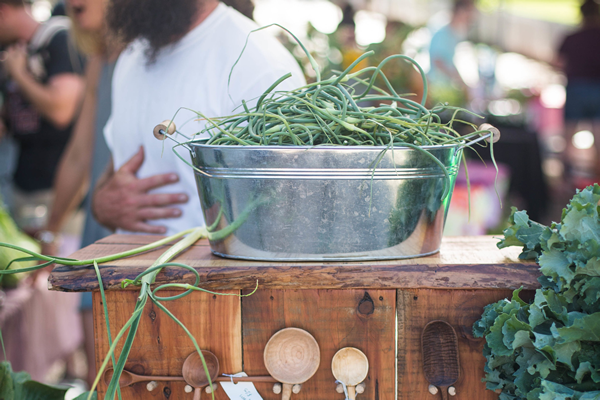
For us, a small-local business, we were reminded we can turn off the television, renounce hectic amusements, and discover the re-creation of good work.

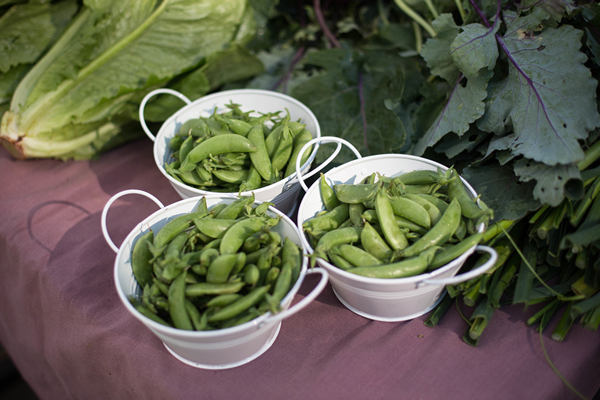
Like growing a garden
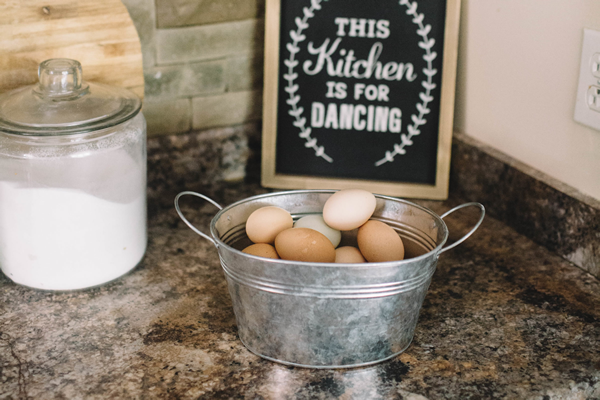
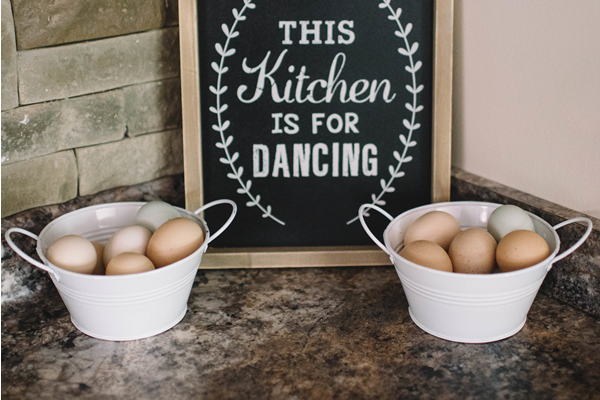
Gathering eggs from the chickens you’re raising to make a living working with soil and animals. Working with soil and animals can contribute to a good living, that is, to the art of living well or the slow movement.

It is being a happy, thoughtful walker - not a stressful runner.  Slow living and slow thinking - part of raising chickens or growing a garden -can help us  discover the re-creation of good work: working with care and patience, working with family and friends, and working toward excellence and joy.


Thursday, May 2, 2013

Take Care of your Yard Tools

To keep your tools ready to use and to make them last longer, maintaining them is a must. Here are some tips for various tools that you may have in your arsenal:

Pruning Shears:
Always clean your blade with a soft dry cloth after each use.
Oil the revolving handle shaft and spring, oil after each use in order to prevent rust.
Sharpen your blade before using.
Adjust the blade alignment if your cuts aren't clean. 

Lawnmower:
Check oil and other fluids. Replace the filter, change the transmission fluid, engine coolant, and fuel.
Sharpen your blades and balance them.
Inspect the belts for wear watch for cracks or separation if that is present a new belt is needed, adjust tension of belts.
Check tire tread and tire pressure.

Weed Eater:
Some weed eaters require more care, so be sure to read your manual to be sure you know how to properly maintain your own weed eater. What we are sharing are just very basic tips.
Be sure you keep the weed eater clean so it doesn't rust.
If you have a build up of grass or other debris use an air compressor or leaf blower to remove the debris.
If your weed eater uses string, replace when it gets worn down in order to maintain the best use of your weed eater.

Garden Hose:
Hopefully your hose spent the winter sheltered from the elements after it was drained and disconnected. If not it may have experienced freezing and cracking which means you'll need to invest in a new hose.
If your hose was properly stored it is fairly easy to get your hose ready to use this summer. Stretch it out so that it can lay in the sun, this helps to make your hose more flexible. To prevent your hose from breaking or springing leaks it is advised to use a garden hose reel.

Shovels, Hoes, and Spades:
Sharpen and oil the blades before using this spring. Be sure they are clean, dry and oiled before putting up each time in order to prevent rust. Oil the handles if they are wooden.

Garden Seeder:
After each use wipe out the hopper with a cloth to get rid of dust, dirt, or residue from chemically treated seeds.


Monday, April 29, 2013

Backyard Chickens

We hear of more and more people becoming interested in raising their own chickens for fresh eggs. People are showing an interest in knowing where their food comes from, and part of that results in growing your own food. Even people in more urban areas are trying to find ways to have their own chicken coop.
So what are the main reasons that people want to keep chickens? Let's look at a few:

The first one is obvious, to be your own food producer. Raising your own chickens for eggs and food allow you to know first hand what the animal ate, what conditions it was living in, and how it was treated.

Eating fresh. Fresh eggs are amazing. And if you garden as well you can have an abundance of fresh food in your refrigerator.

Weed & Insect control. Chickens like to eat bugs, grasses, and other plants that may sprout up.

Make new friends. Team up with other people in your area who raise back yard chickens to trade tips and tricks.
Other than the reasons for keeping them, you should probably know a few things about keeping backyard chickens:

Legalities: This is going to be different for every town. So it is best if you check with your city council. If you live in an area with a Homeowner's Association, you will need to check with them also.

Roosters: Do you need a rooster? If you just want hens for eggs and do not want to breed your chickens then a rooster is unnecessary. The hens will lay so long as they are happy, comfortable, and getting the right nutrition.

Hen Quits Laying: Chickens have a lifespan of up to 12 years. However, they usually only produce large amounts of eggs between 6 months to 2 years of age, after 2 years the hen will not produce as many eggs. To keep the eggs coming you will need to invest in new hens and have a plan for the old ones. Some people use their hens that have quit laying as a food source. If this is not something you would be willing to do, you will need to find an alternative.

How Much Room is Needed: This will depend on local codes and on how many chickens you have. Keep in mind that the majority of towns and cities have ordinances that state how far a chicken coop has to be from other structures (this is usually somewhere around 20', but always check your local laws). Inside of the coop your hens will require about 2-3 square feet of space each. The outdoor run needs to offer 4-5 square feet of space per each hen.

Cleaning: Chicken manure can be quite potent. To keep your chickens healthy and happy, you will want to get rid of manure every 1-2 days. For deep cleaning 2 or more times a year. There are methods to helping keep a chicken coop clean on sites such as BackYardChickens.com


Amongst the farm animal supplies on our website you will find supplies to help you with your chickens. We have a variety of poultry feeders, waterers, heat lamps, and even a nesting box in our poultry supplies section.


Tuesday, April 23, 2013

New Buckets and Tubs

In addition to the decorative buckets that we've been offering on our site for several years, we have now added some new items that would look great in your home, garden, or storage space.

Above, you can see our new ice buckets, these come in four fun colors and would look great on the picnic table at your next cookout or BBQ.

We also have new painted tubs in four fun colors. These tubs would make great storage tubs, or use as planters in your garden. The uses for these are nearly limitless.


Copper planters make a great contrast to brightly colored flowers. We have these planters in 1 and 2 gallon sizes.

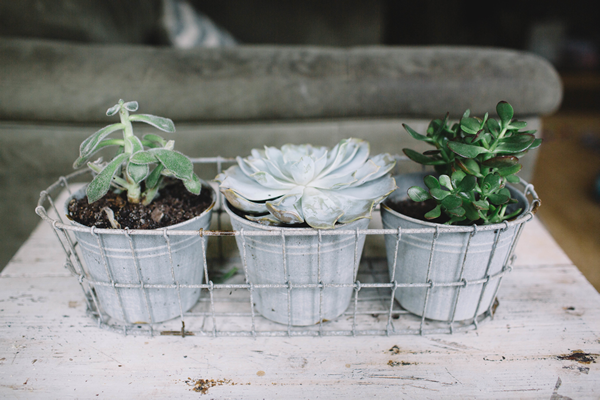
These 3 small copper planters would make a great herb garden for your kitchen window sill. Keep fresh herbs on hand for your favorite dishes.

Want more ideas on using buckets? Read our blog 101 Bucket Uses.

Wednesday, April 3, 2013

Using a Hand Crank Ice Cream Maker

Warm summer months are upon us and with that comes the much loved treat of ice cream. There is nothing better to enjoy on a hot summer day.

One of the most favorite methods of making ice cream at home is using a hand crank ice cream maker, these machines add to the nostalgia of having family together for a cookout on a hot summer day.


When using a hand crank ice cream maker you will first want to be sure that you have all the parts to it. Next make sure that everything is good and clean. If you still have the manual to your maker there should be some recipes in it. Pick out one of those or find one online that you want to try out.

It is recommended to make the custard for your ice cream a little ahead of time so that it has time to chill before you put it in the ice cream maker.

Have your ice prepared by having it broken into small coarse pieces.

Place your ice cream canister into the wooden bucket of your ice cream maker. It will need to rest easily on the metal guide that is in the bottom of the bucket. Place your dasher into the canister and be sure that its socket fits onto the protrusion on the bottom of the canister.

Pour the cooled ice cream mixture into your canister. Do not fill it more than halfway full. Place the canister cover and turn your dasher stem with your fingers until it easily turns.

Grasp the gear frame and work the dasher stem into the socket of it.

Slide the cranking end of the ice cream maker into the bucket ear. The opposite end of your gear frame will fit into the bucket latch.

Fill your wooden bucket with ice, to speed up the freezing of your ice cream, layer ice then rock salt. Crank for about 2 minutes so that the canister chills evenly. Add more ice and rock salt as the ice melts down (be sure not to plug the hole on the side of your ice cream maker it is used to drain excess brine out of the ice cream maker).

In about 20-25 minutes your ice cream mix should be sufficiently churned. But it does sometimes take longer than this with a hand crank ice cream maker. Your ice cream should be about as consistent as soft ice cream. To determine this pay attention to how difficult is to turn the crank. Further churning of your ice cream past this point will not improve the quality of it.


Hold your canister cover firmly. Remove the gear frame carefully. Take off the canister cover and remove the dasher. You will want to use a wooden spoon to scrape off any excess ice cream. Now your ice cream is ready to be eaten.

Related Posts Plugin for WordPress, Blogger...